Medium or Media Access Control are a collection of protocols that describe transmission across the data link layer.
S-MAC
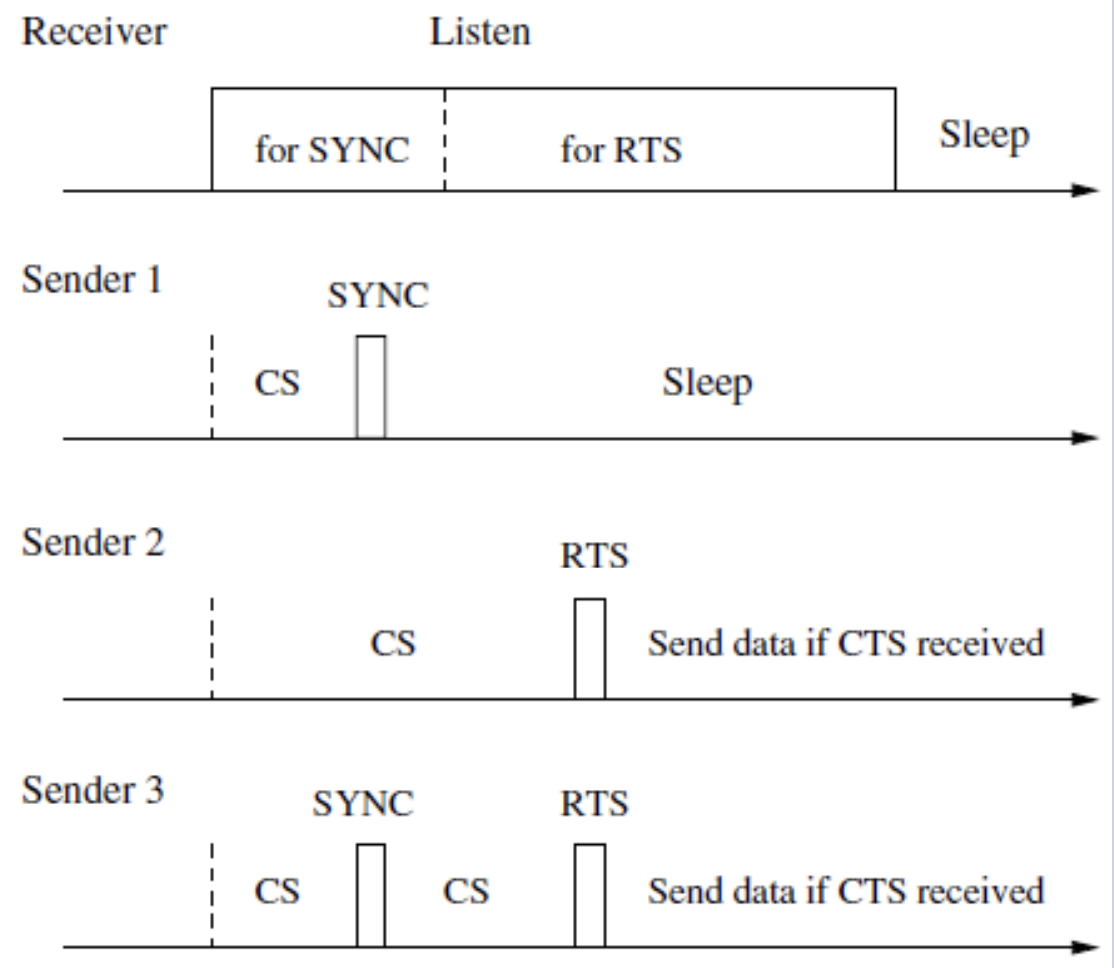
Sensor Medium Access Control is based on Carrier Sensing with Handshaking. It is characterised by periods (cycles) of sleeping and listening for data packets.
Nodes exchange schedules with their neighbours before beginning the cycle.
B-MAC
This is considered an improvement on S-MAC, aiming to remove the need of SYNC packets being exchanged to synchronise transmissions. In B-MAC, nodes must all have the same cycle length.
B-MAC replaces RTS/CTS handshaking with clear channel assessment. There is also no need for synchronisation.
Clear Channel Assessment
CCA relies on generating a noise floor within a signal graph for transmission detection.
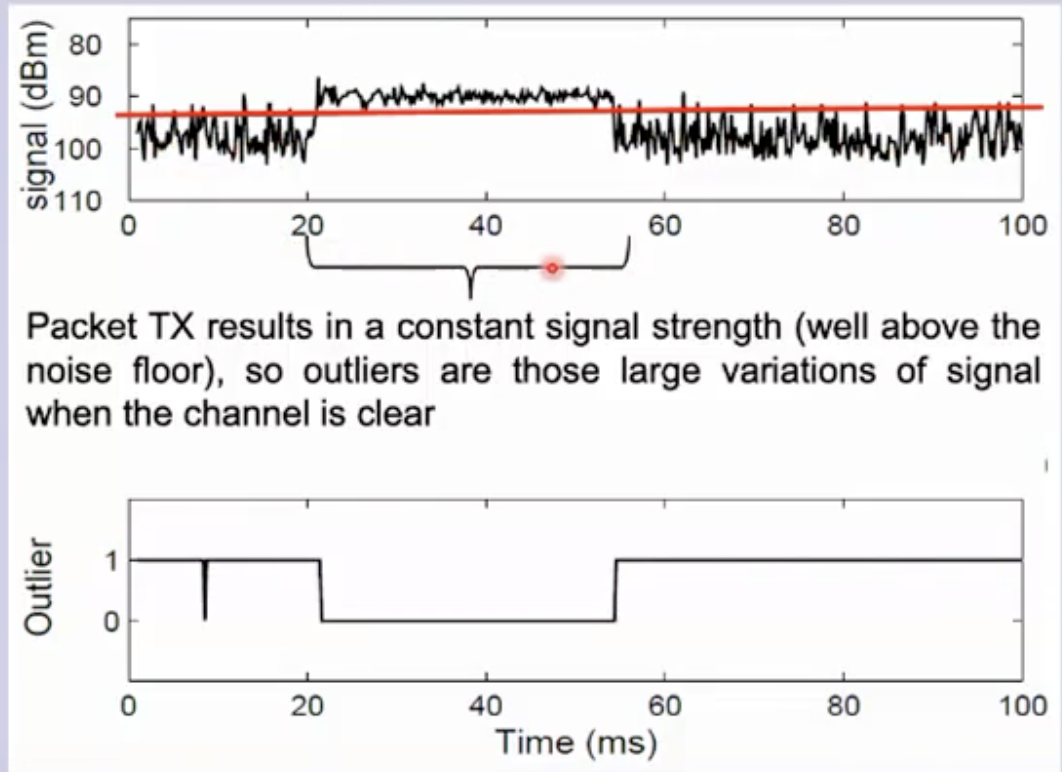
N.B. A sample of the channel is taken after packet transmission, where noise is stable, to generate a noise average.
Low Power Listening
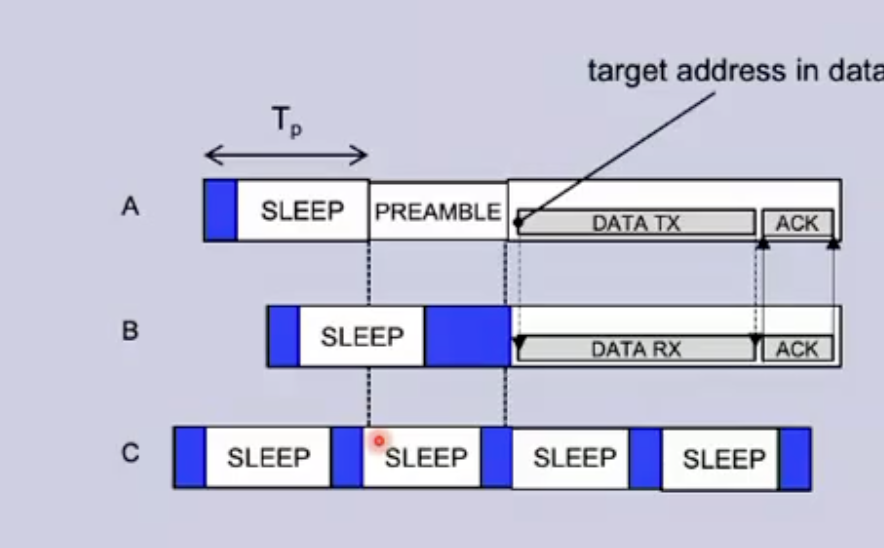
In LPL, a preamble is sent before each packet to alert the intended recipient. The length of the preamble must be at least the length of the cycle, .
X-MAC
X-MAC reduces energy consumption by reducing the length of the preamble and using preamble strobing to keep gaps in transmission such that bidirectional transmission is improved and latency reduced:
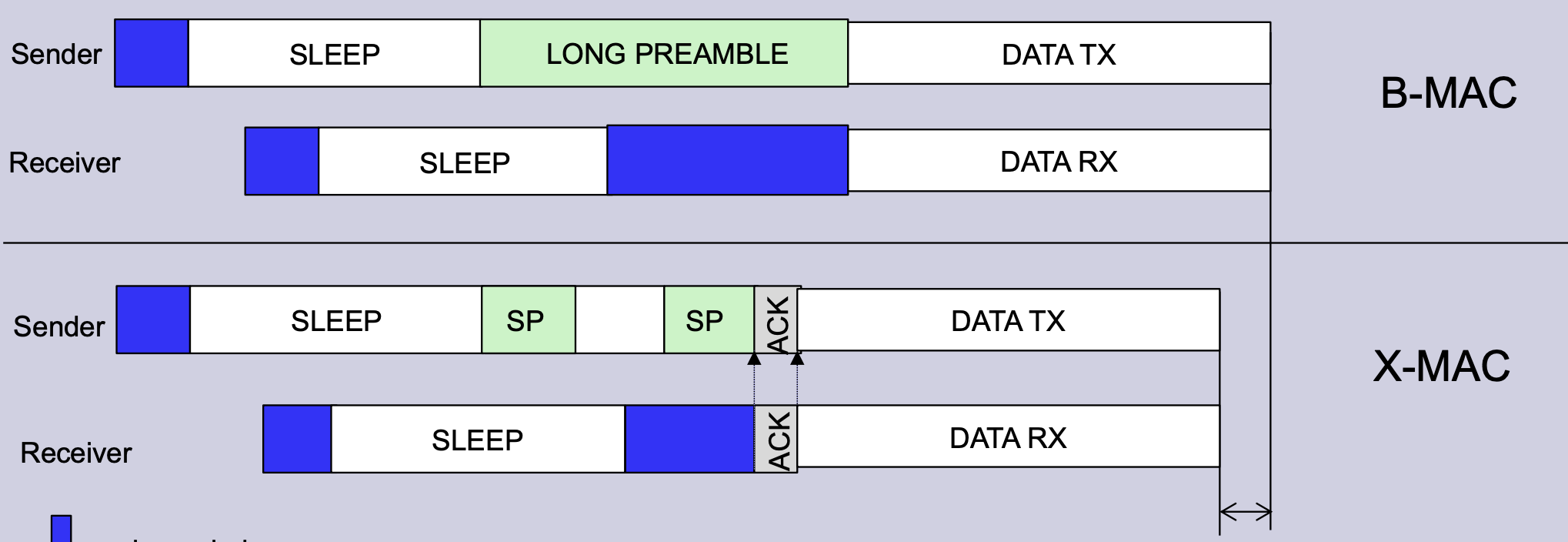
An early acknowledgement is used to confirm reciept of the preamble.