These are a group of techniques used to widen signal bandwidth and reduce interference across multiple frequency channels.
There are two main methods:
Direct Sequence (DSSS)
DSSS transmissions multiply the transmitted sequence with an added chipping sequence using an XOR operation. Barker codes are commonly used as chipping sequences and are often used in transmission delay detection.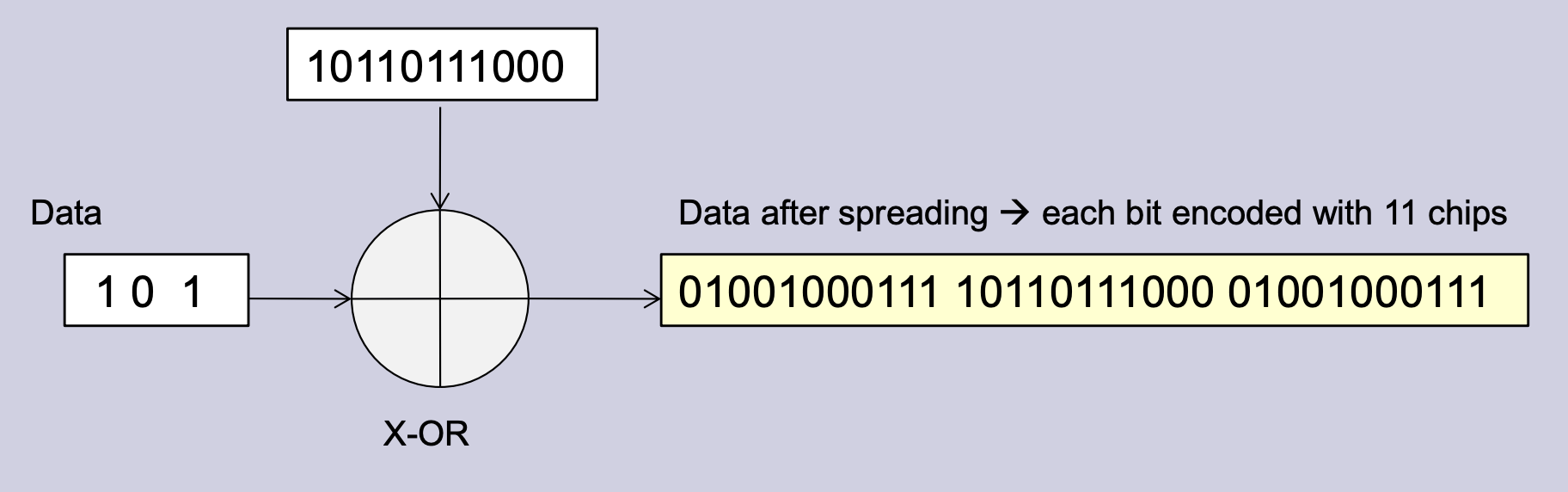
The aim is that Barker codes, when multiplied with themselves (meaning a correct transmission), should result in the length of the transmission.
Frequency Hopping (FHSS)
This reduces interference (and increases bandwidth) by changing the channel (and consequently, the frequency) of transmission at regular, pseudorandom intervals. By changing frequency regularly, interference across a singular channel does not affect the message when transmitting across other channels.
The hopping sequence is shared between the transmitter and the receiver. Bluetooth uses this method.