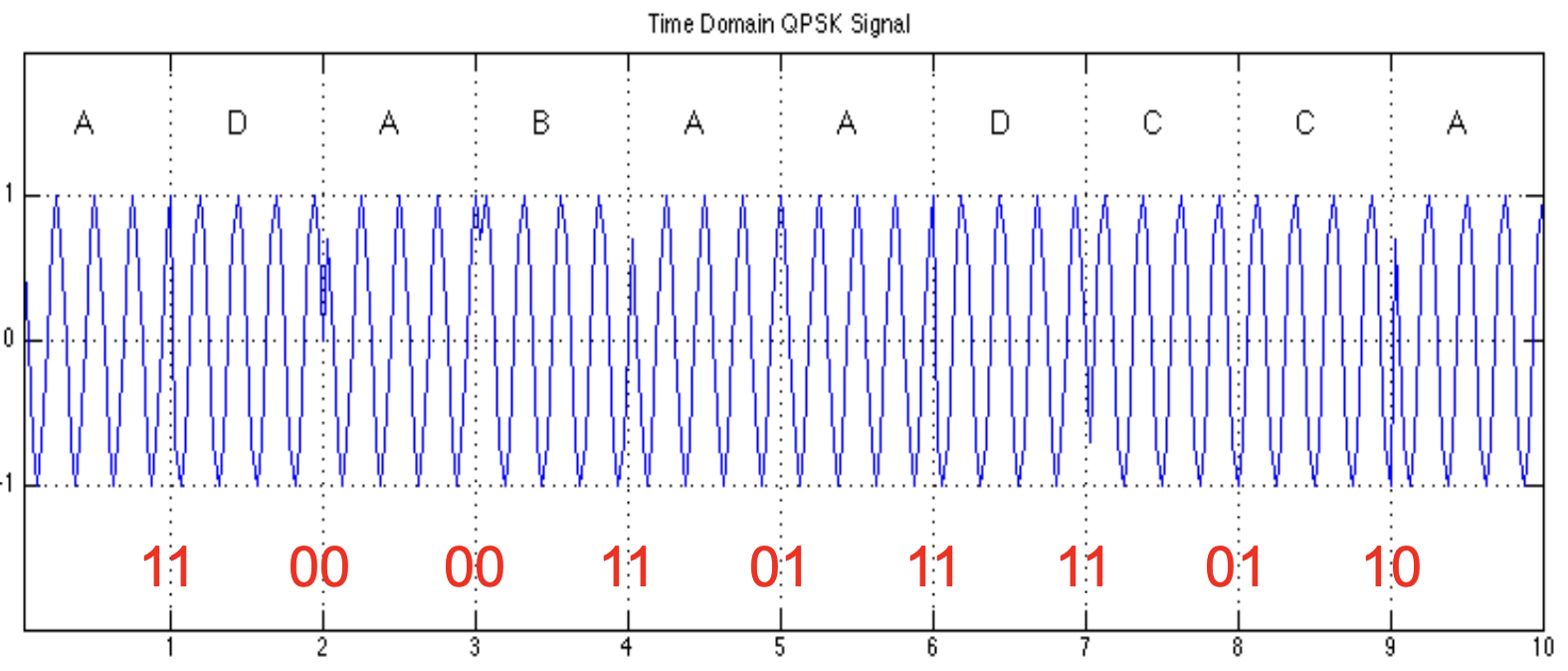
Modulation is the process of converting data to electromagnetic waveforms. Conversely, demodulation is the process of converting EM waveforms to digital or analog data.
We note that a sinusoid modelling a waveform is characterised by: for amplitude , frequency , time and phase .
Analog Modulation
There are two basic modulation methods for analog signals. We consider the signal itself, in this case, this is a simple sine wave:
 The signal will have a carrier, which acts as the waveform being modulated according to the characteristics of the signal:

Amplitude Modulation
In AM, the carrier’s amplitude is modulated according to the signal data. Using the above examples:
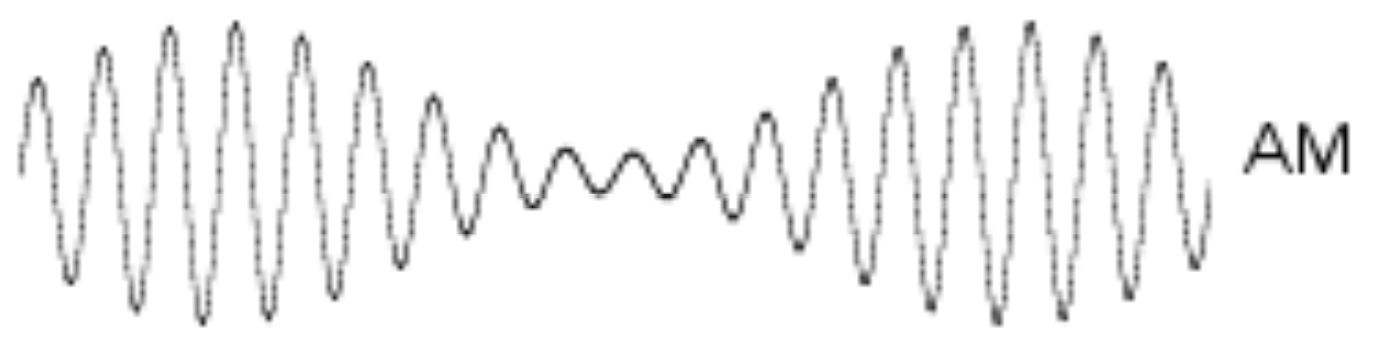 More specifically, we define a signal, and carrier, as:
respectively, when considering the angular frequency .
Hence, we can calculate the value of the modulation, as:
Frequency Modulation
In basic terms, FM is similar to AM, but is characterised by changes in frequency. Using the example above, this would be demonstrated as:

Digital Modulation
We will consider four types of modulation techniques.
Basic Modulation Techniques
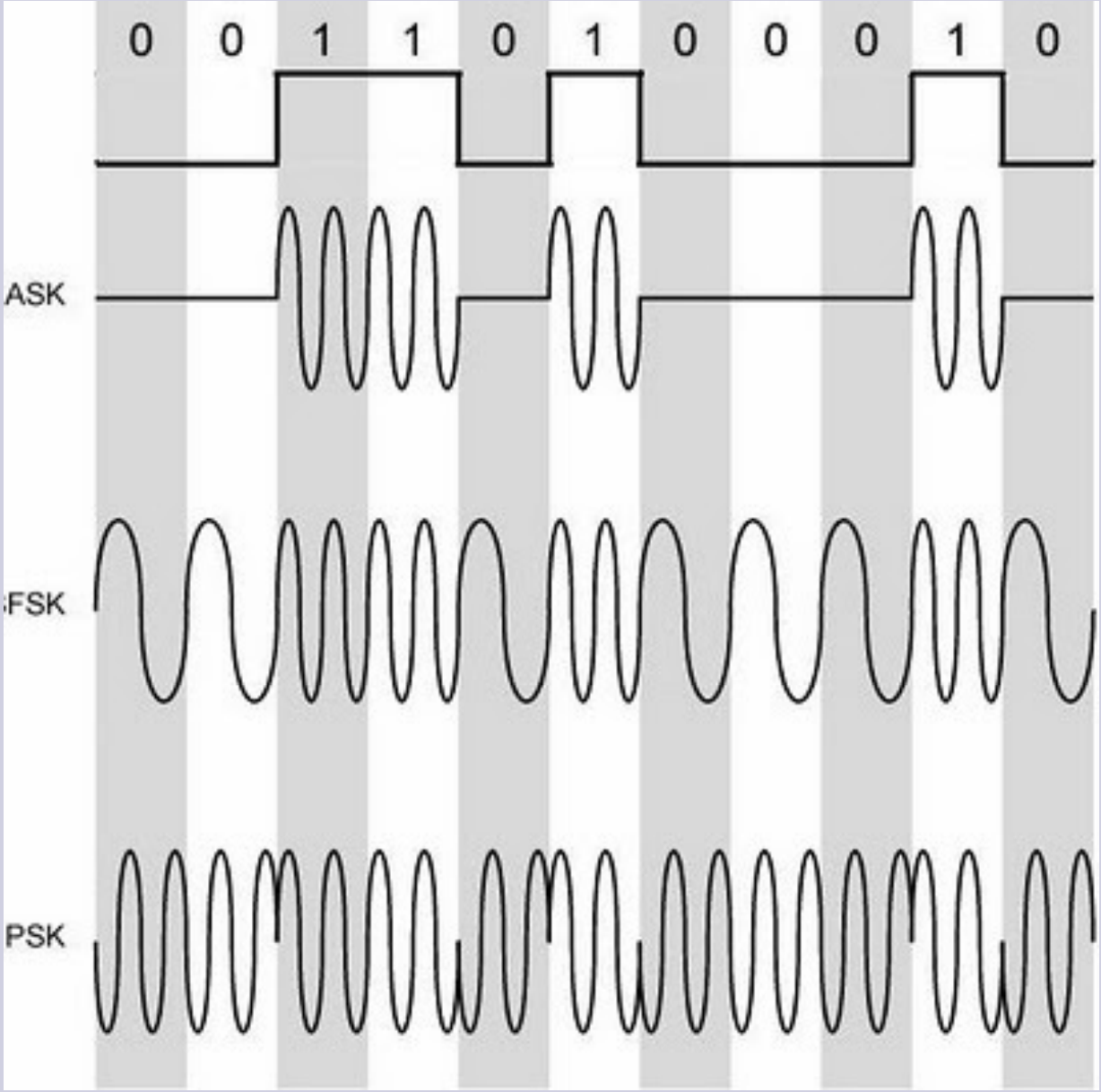
There are three basic techniques:
- Amplitude Shift Keying (ASK)
- Frequency Shift Keying (FSK)
- Phase Shift Keying (PSK)
These are characterised in the example below:
Quadrature Phase Shift Keying (QPSK)
QPSK is similar to PSK, but we consider four phase definition points (or angles). As such, we can convey two bits of information, rather than one.